Crowd Control Barriers not appropriate for Edge Protection
Background
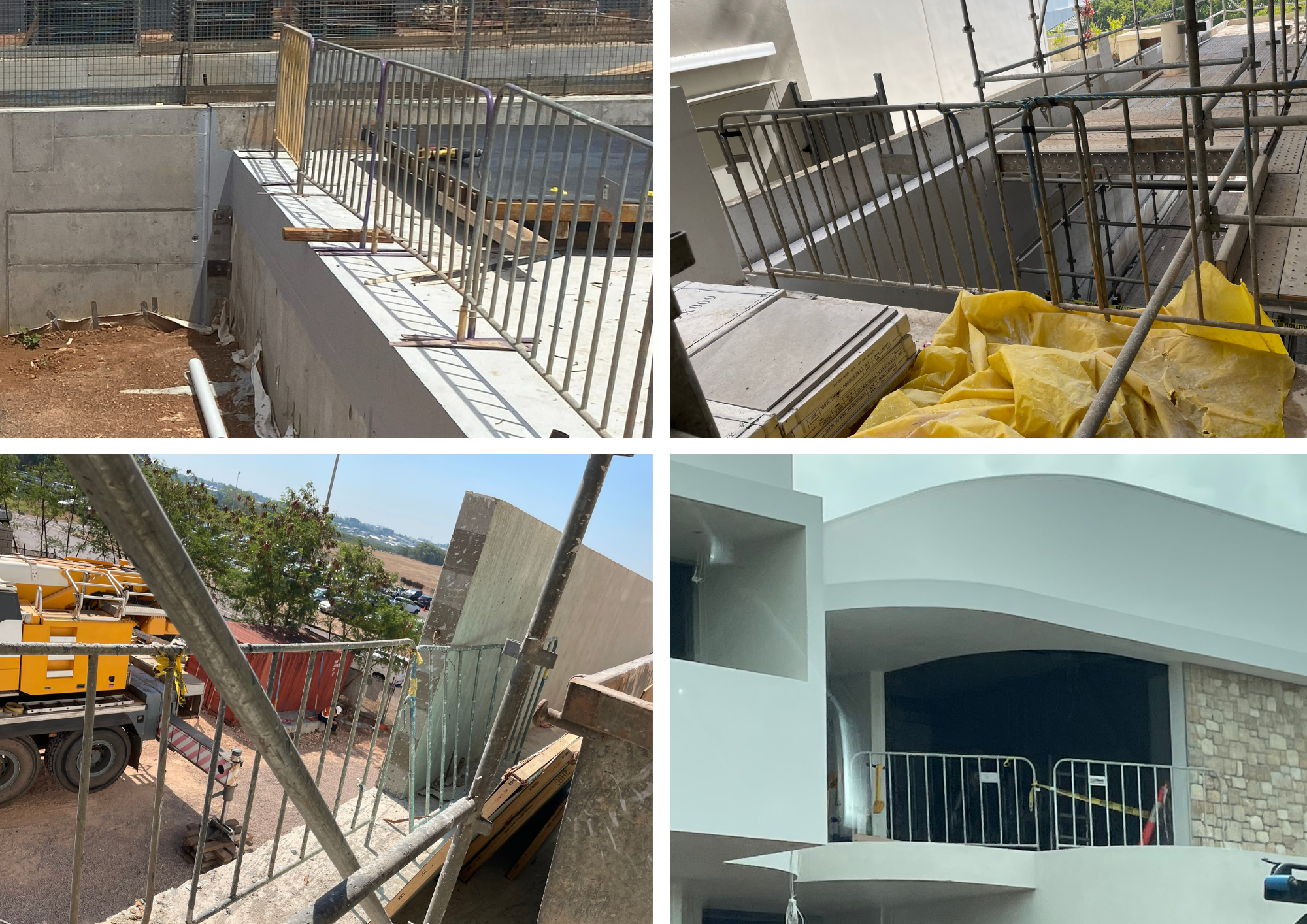
WorkSafe Inspectors have identified a concerning trend of crowd control barriers being used as edge protection on construction sites. While it is encouraging worksites are attempting to manage the risk of falls, the barriers found by the Inspector’s did not meet the requirements for providing adequate fall prevention when placed on a live edge.
The Code of Practice – Managing the Risk of Falls at Workplaces, requires any barriers used for edge protection be designed and constructed to withstand the force of a person falling against it. This means robust systems such as guardrails, solid balustrades, or engineered mesh panels with reinforced top edges, mid-rails, and toe-boards. Temporary edge protection must also comply with AS/NZS 4994.1:2009 standards, ensuring strength, correct height (900–1100 mm), and appropriate structural components.
Using non-compliant barriers for edge protection not only breaches WHS Regulation 78 (Management of Risk of Falls) but also places workers at serious risk of injury or death. All open edges, including roofs, stairwells, and platforms, must be secured with proper engineered guardrail systems or equivalent edge protection measures.
Disclaimer
The above information is based on preliminary findings from NT WorkSafe’s initial enquiries. Enquiries are ongoing in relation to these concerns and to determine the appropriate regulatory response that may be required.
Safety Information
Falls are a major cause of death and serious injury in Australian workplaces. Regardless of the task, if there is a risk of a person falling from one level to another, the person conducting the business or undertaking (PCBU) must manage the risks associated with the hazard.
NT WorkSafe strongly urges all workplaces undertaking similar activities to ensure the following measures are in place, and that they are effective:
- Undertake Hazard Identification, Risk Assessment and Control (HIRAC) beginning by identifying hazards related to risks of falls in the workplace using Managing the risk of falls at workplaces Code of Practice.
- Persons in the workplace have appropriate training and instructions necessary to protect them from risks to their health and safety; associated with working at heights.
- Consider available control measures and implement them to eliminate the risk so far as is reasonably practicable, where it is not reasonably practicable to eliminate the risk, minimise the risks so far as is reasonably practicable. The PCBU must manage the risk of falls in a workplace by providing a safe system of work, which may include one or more of the following:
- fall prevention device
- if it is not reasonably practicable to provide a fall prevention device, provide a work positioning system; or
- if it is not reasonably practicable to comply with either 1. or 2., provide a fall arrest system, so far as is reasonably practicable.
- Ensure the control measures meet any Code of Practice or Australian Standards requirements.
- A fall prevention system used as a control measure must be specifically engineered for the intended task or certified by a suitably qualified engineer, following consultation with the manufacturer, as meeting the requirements of AS/NZS 4994.1:2009.
- Discuss the hazards identified and the control measures you have implemented at your next toolbox talk or team meeting.
- Follow the Northern Territory’s Work health and safety consultation, cooperation and coordination Code of Practice, and consult your workers and their health and safety representatives when deciding how to manage the risks in the workplace, including when reviewing and making changes to existing processes.
The Work Health and Safety (National Uniform Legislation) Regulations 2011 classify a number of activities as ‘high risk construction work’ for which a Safe Work Method Statement (SWMS) must be prepared before the work starts.
This includes construction work where there is a risk of a person falling more than two metres or works carried out in or near a tunnel, shaft or trench that has a depth greater than 1.5 metres. For further information on developing a SWMS see Appendix E - High risk construction work safe work method statement template of the Construction Work - Code of Practice.
Further Information
- Code of Practice - Managing the risk of falls in housing construction
- Code of Practice - Managing the risks of falls at workplaces